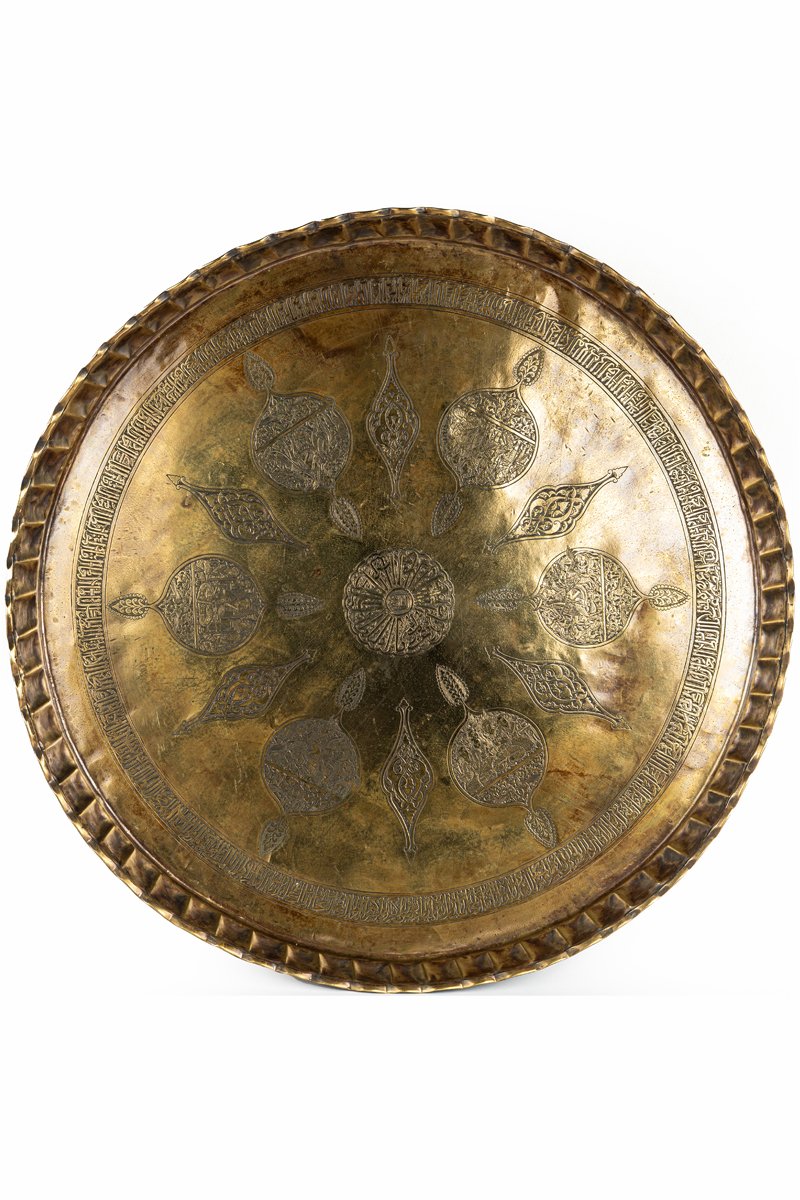
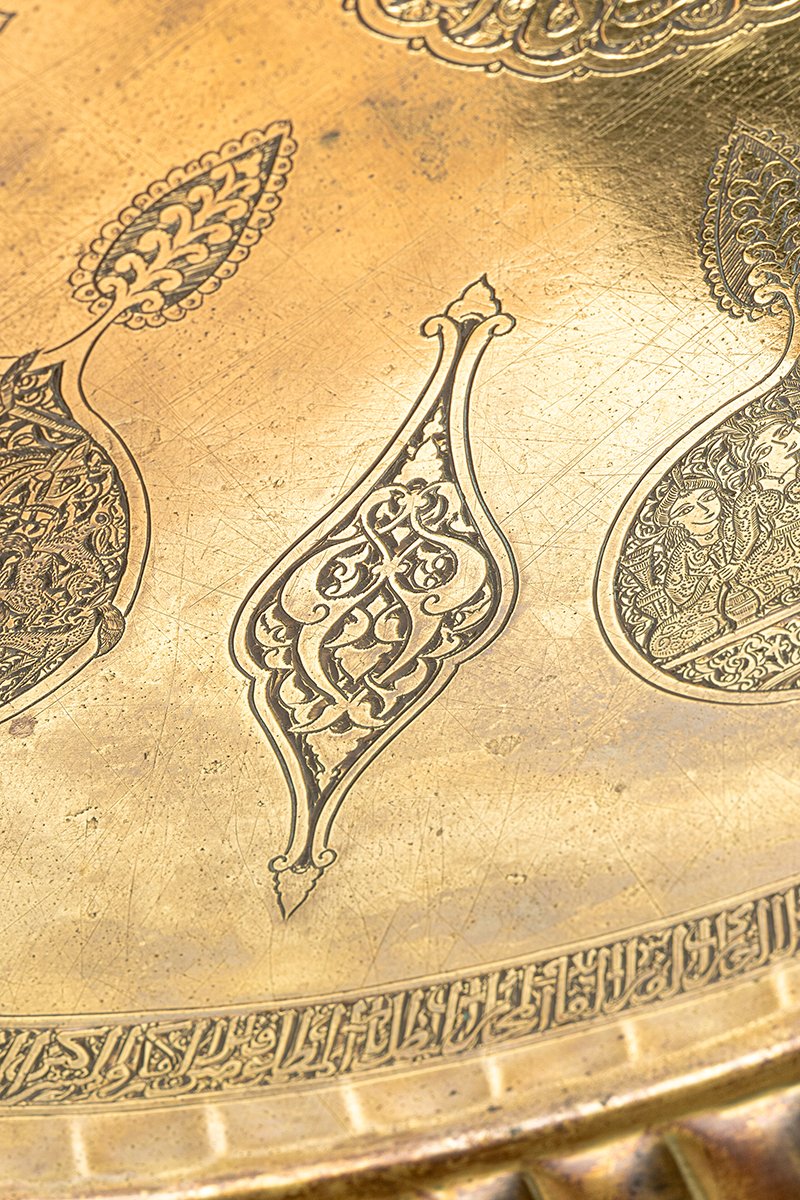
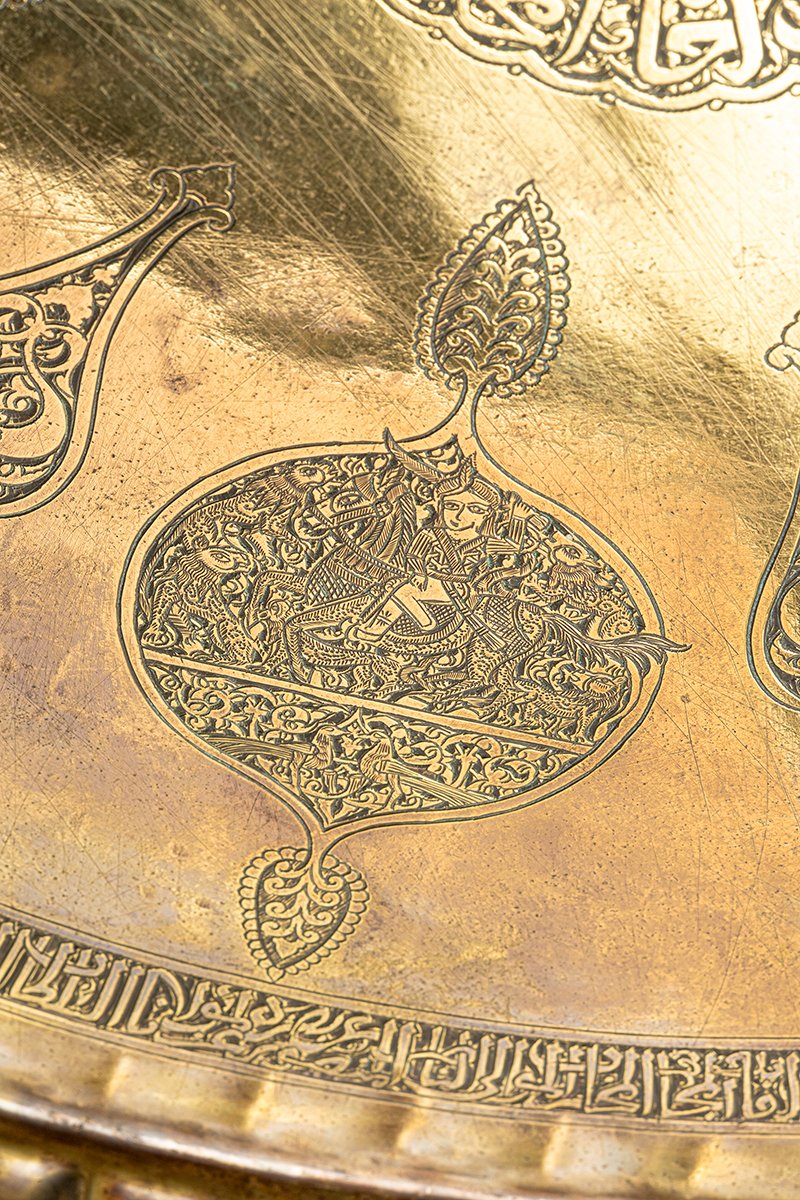
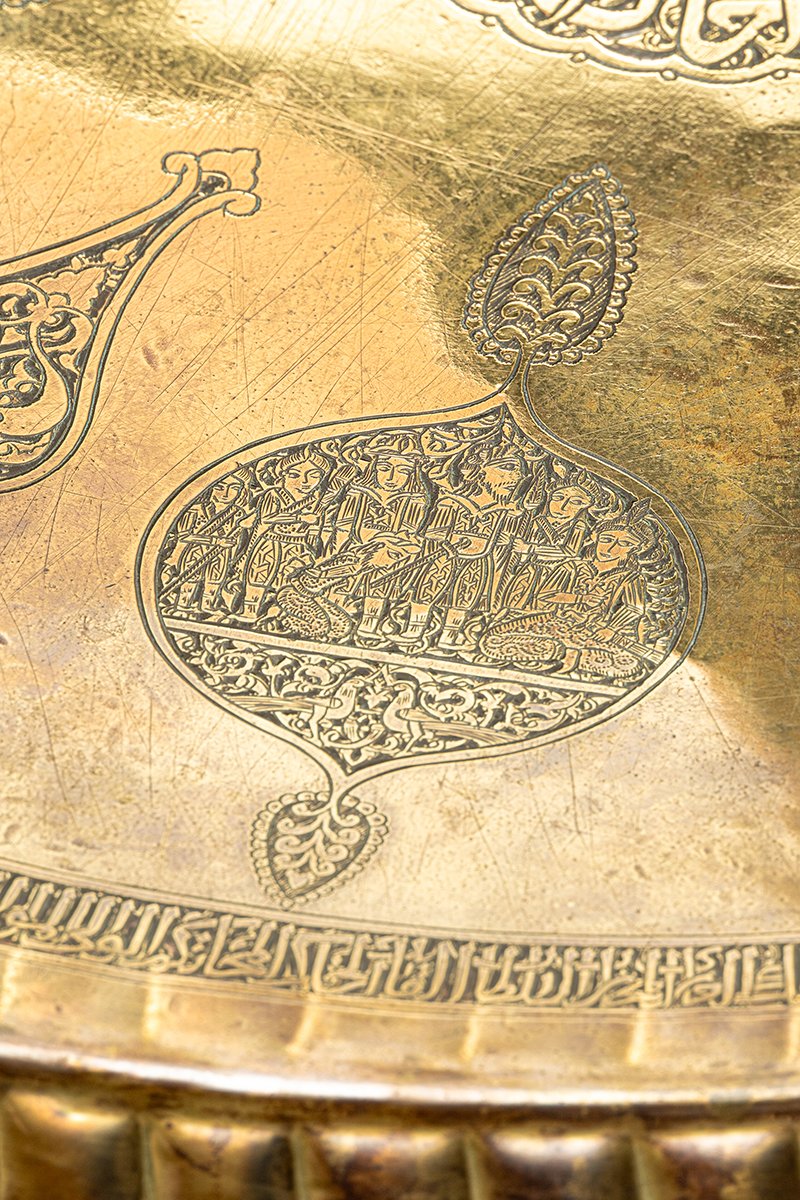
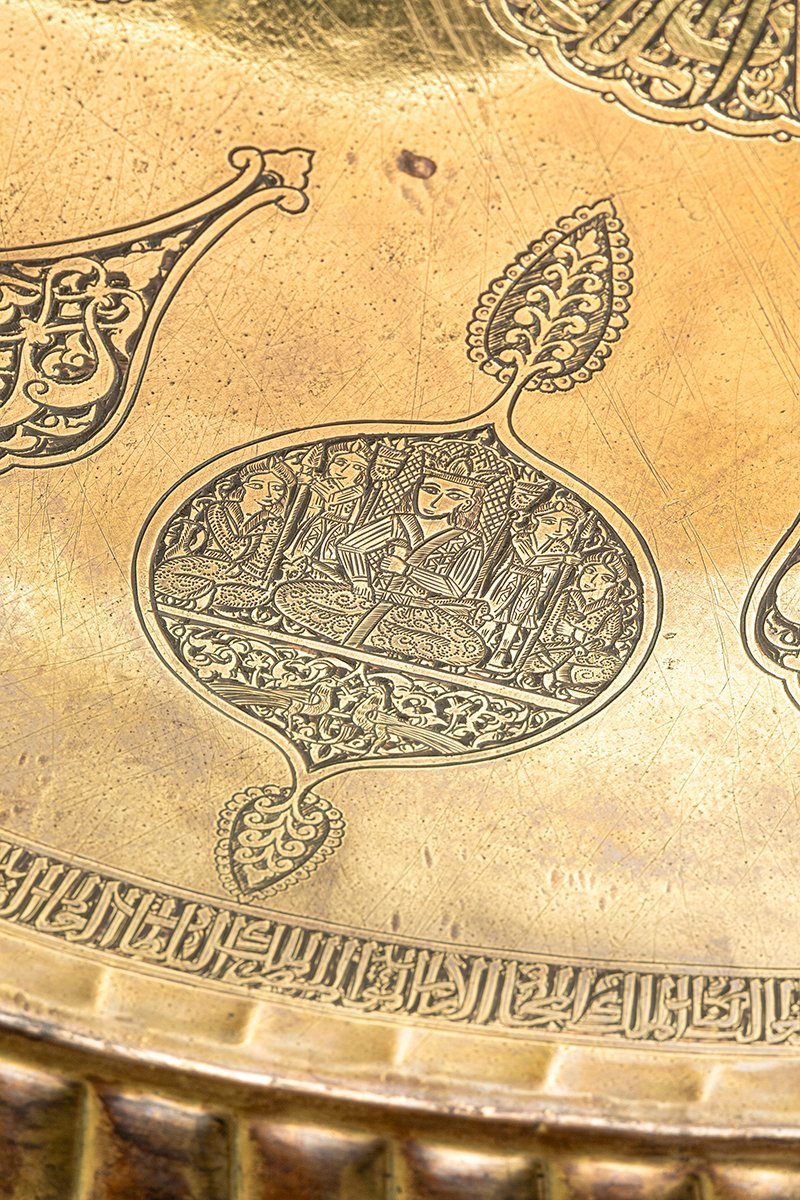
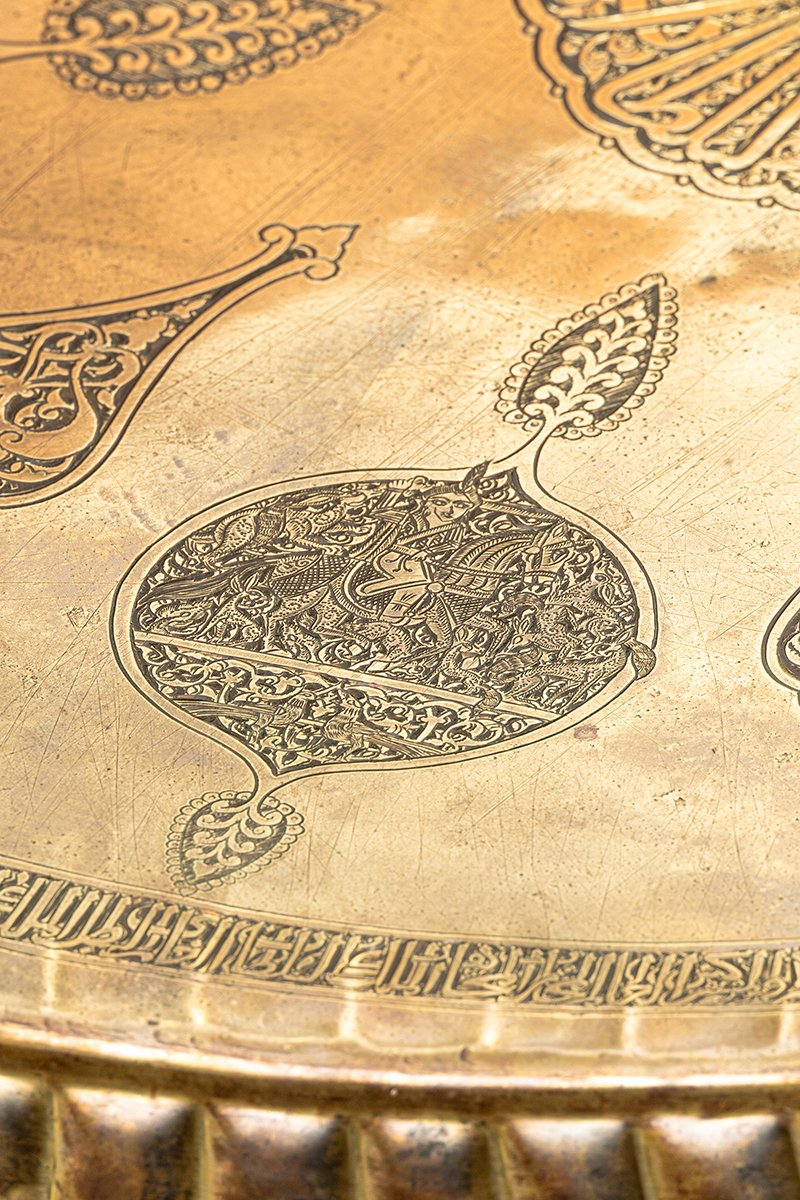
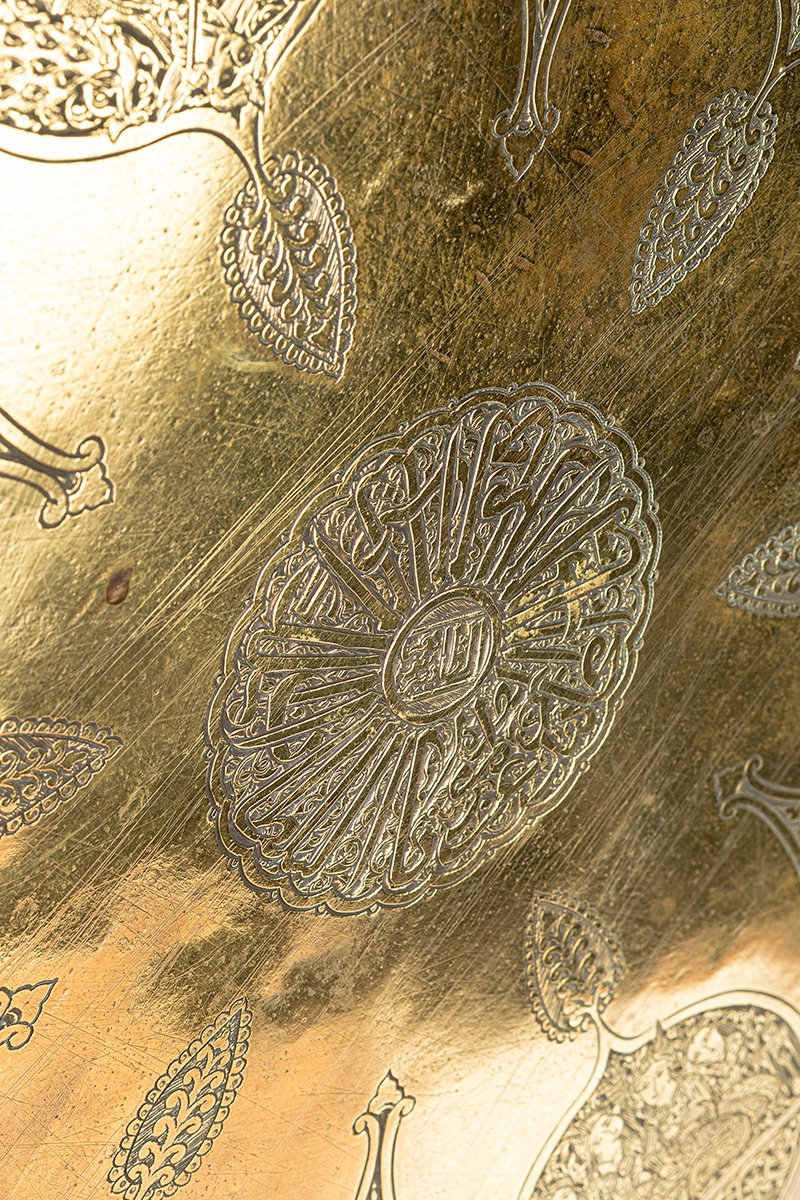
This tray presents a circular stage, where word, image, and ornament are carefully balanced into one composition. At the center lies a rosette medallion, radiating outward into alternating teardrop and almond-shaped reserves. Each reserve forms a self-contained world: some filled with dense vegetal arabesques, others animated with figural narratives.
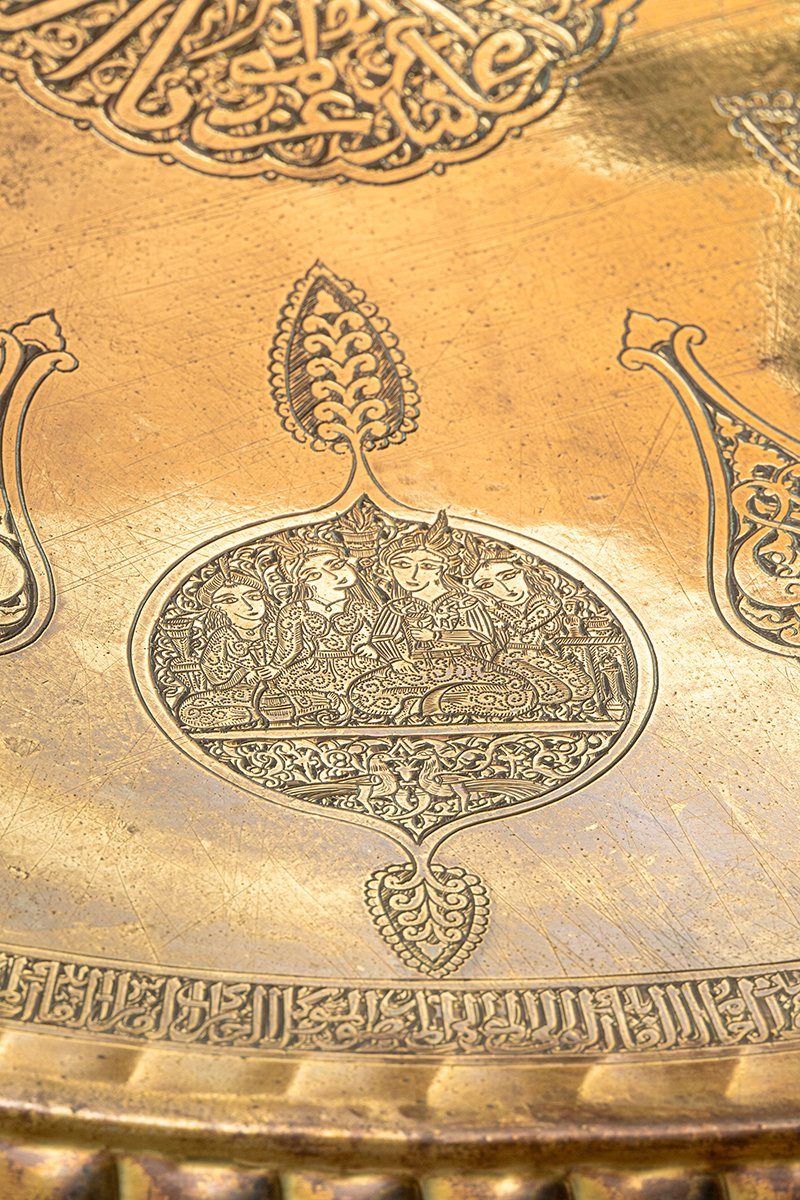
Among the most striking are the narrative roundels: gatherings of courtly women, possibly princesses, seated in quiet intimacy; riders in dramatic action, poised mid-hunt or in contest; and attendants framed by arabesques, their gestures frozen in elegance. Another powerful scene shows a trial, with a humble prisoner brought before a judge, embodying themes of justice and mercy. At the center, the Sultan’s tughra anchors the composition, encircled by praise inscriptions, while at the upper register the king appears enthroned, surrounded by his knights and entourage.
Calligraphic Inscriptions
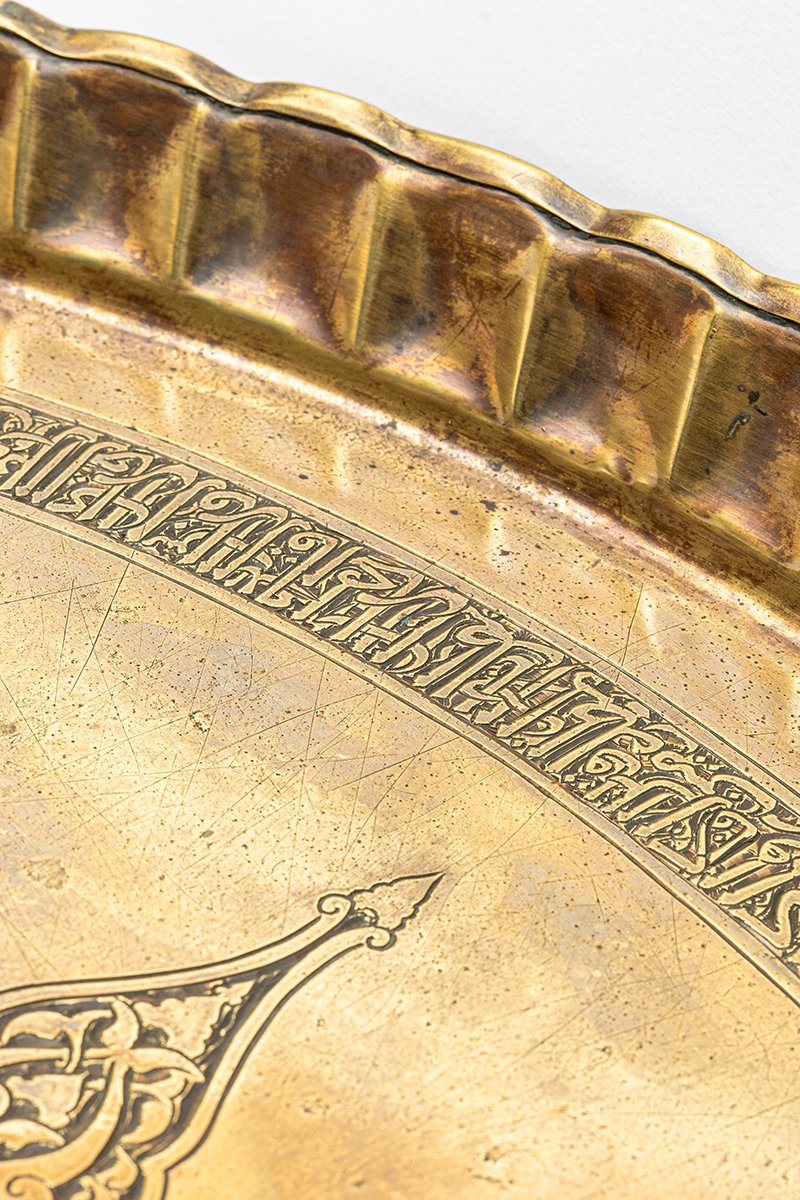
The surrounding inscription proclaims the ruler’s virtues and authority:
"عز مولانا السلطان الملك الناصر العادل المجاهد العالم العامل عز نصره"
Transliteration:
ʿIzz mawlānā al-Sulṭān al-Malik al-Nāṣir al-ʿĀdil al-Mujāhid al-ʿĀlim al-ʿĀmil, ʿizza naṣruhu.
Translation:
“Glory to our lord, the Sultan, the Victorious King, the Just, the Fighter in God’s cause, the Learned, the Diligent, may his victory be exalted.”
These words bind the imagery into a moral framework: praising both the bravery of knights and the justice of a fair trial.
Artistic Details
- Trial Scene: A prisoner bows humbly before a judge, symbolizing fairness and judicial order, a rare narrative in metalwork.
- Royal Presence: The king enthroned among his entourage reinforces themes of sovereignty, majesty, and ceremonial authority.
- Courtly Women: Seated princesses symbolize harmony and refinement within the court.
- Knights & Hunters: Riders in motion, armed and alert, embody bravery and vigilance, virtues emphasized in Fatimid culture.
- Vegetal Ornament: Flowing arabesques and leaf-scrolls fill the empty spaces, serving as a visual rhythm that highlights the narrative scenes rather than overwhelming them.
- Scalloped Rim: The boldly scalloped outer rim, alternating between burnished planes and chased details, reflects light dynamically, animating script and image as the tray is viewed from different angles.
Interpretation
This tray is a Fatimid masterpiece of narrative metalwork, distinct from Mamluk style. It presents the Sultan not only as a warrior-king but also as a patron of justice and order. The juxtaposition of hunts and knights with courtly women and a judicial trial symbolizes the balance of bravery, refinement, and fairness under his rule. Calligraphy amplifies this balance, praising valor and justice equally. To gaze upon the tray is to witness a miniature theatre of rulership, a court where authority, justice, and harmony are inscribed in metal, radiant for all time.