Mamluky Ebn Tolon
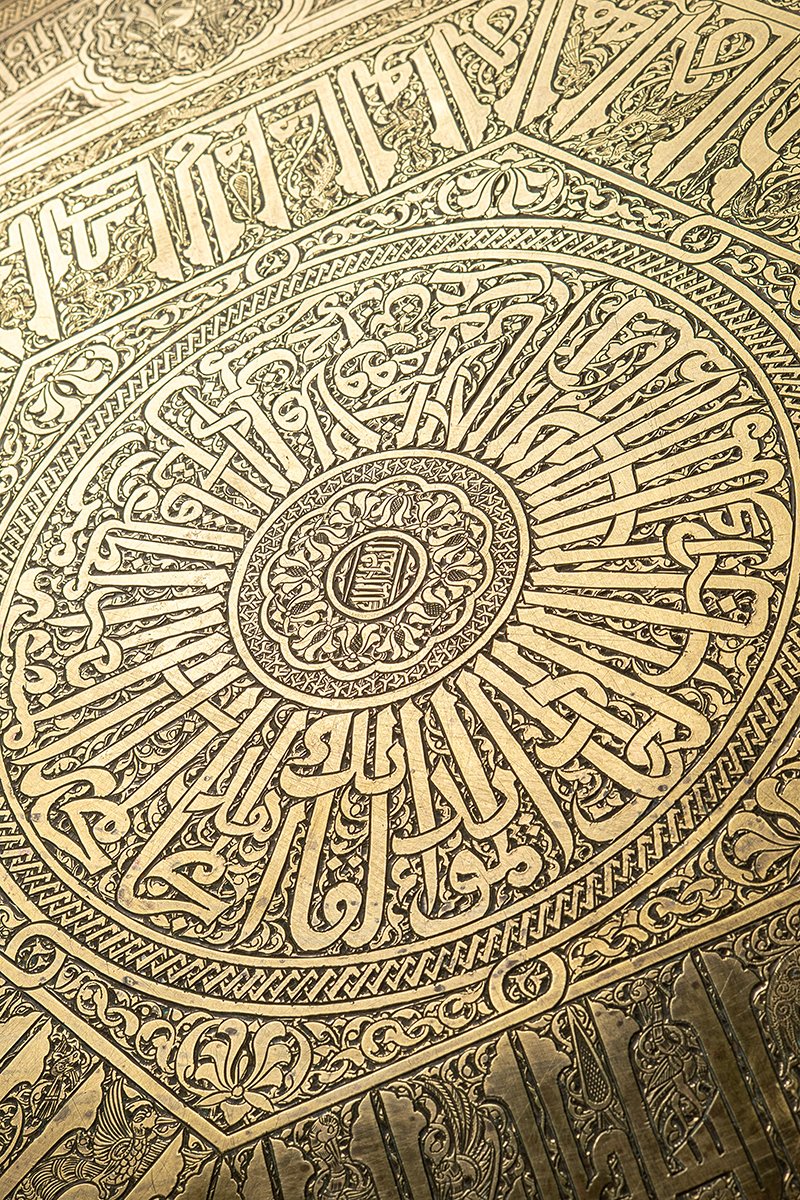
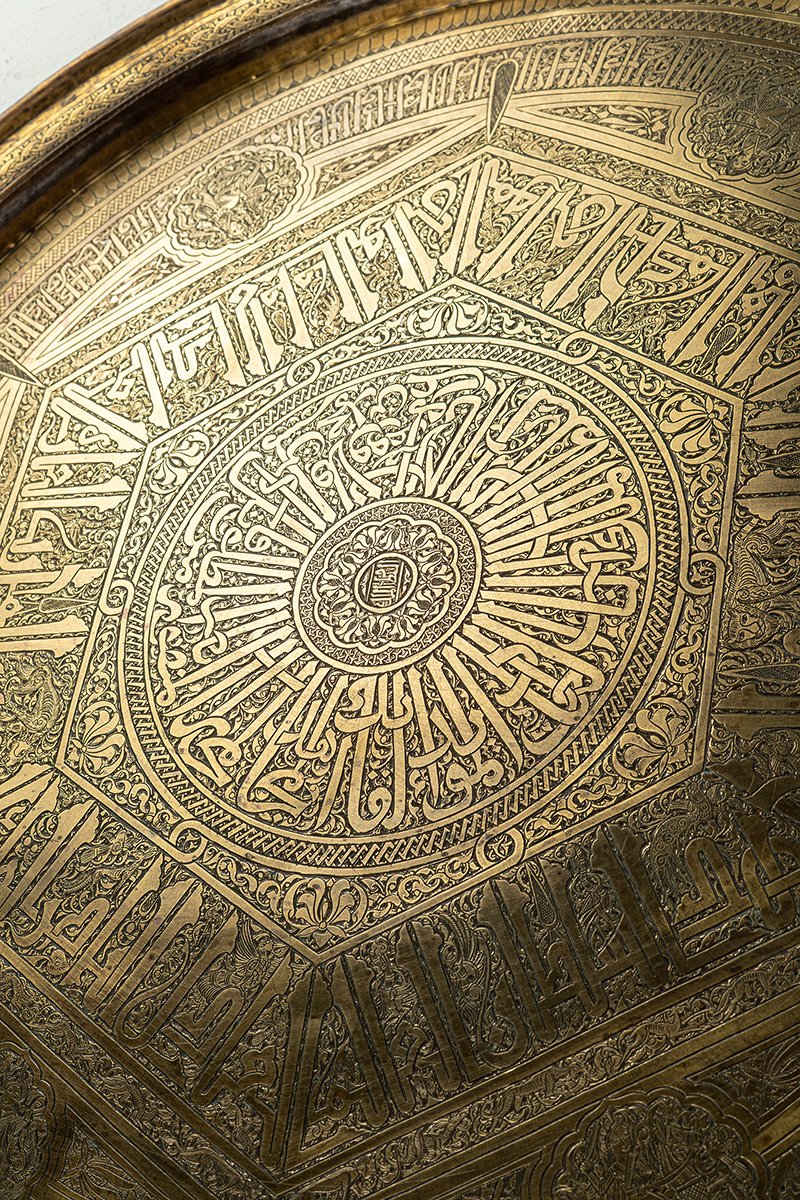
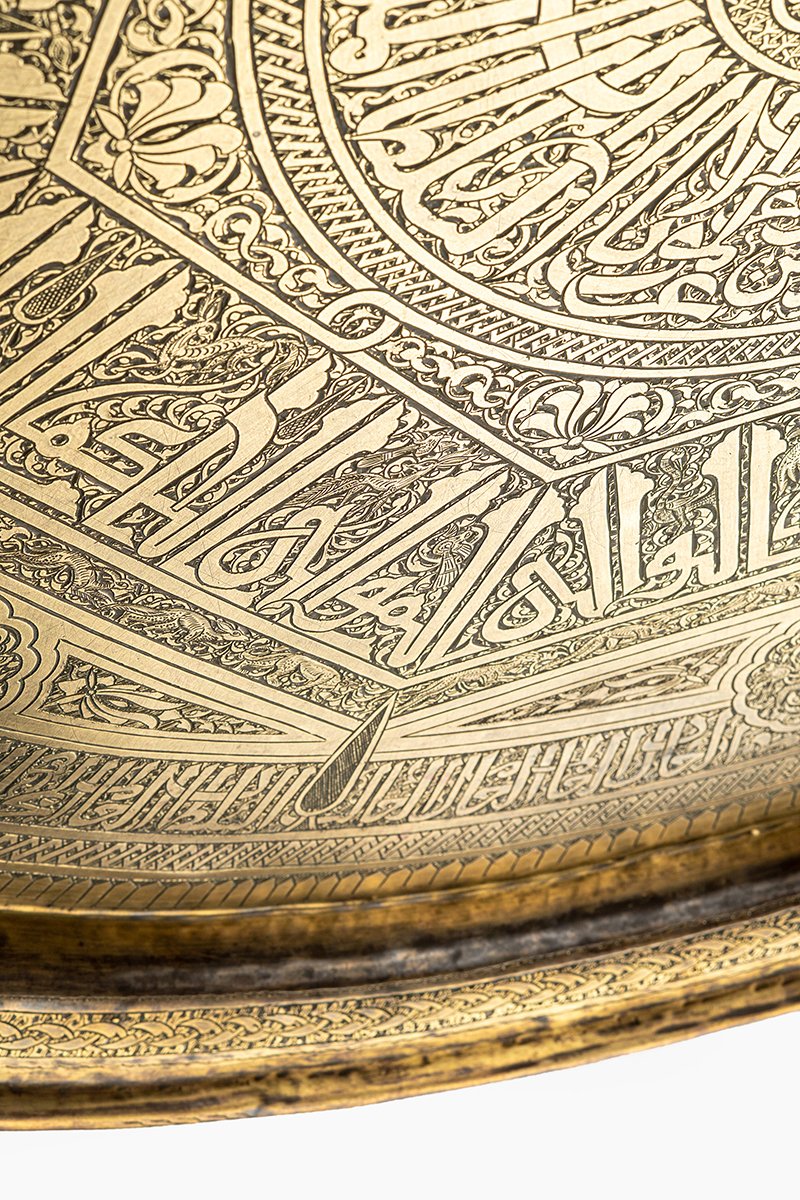
This monumental brass tray is organized not in concentric rings but in a geometry of authority. At its core lies a radiant roundel rosette, bursting outward like a solar disk, its petals filled with dense inscriptions that read as both word and flame. Encircling it, the engraver inscribed a bold hexagon, each of its six sides filled with towering bands of script. The effect is striking: divine verses contained within crystalline order, balancing the fluidity of calligraphy with the permanence of architecture.
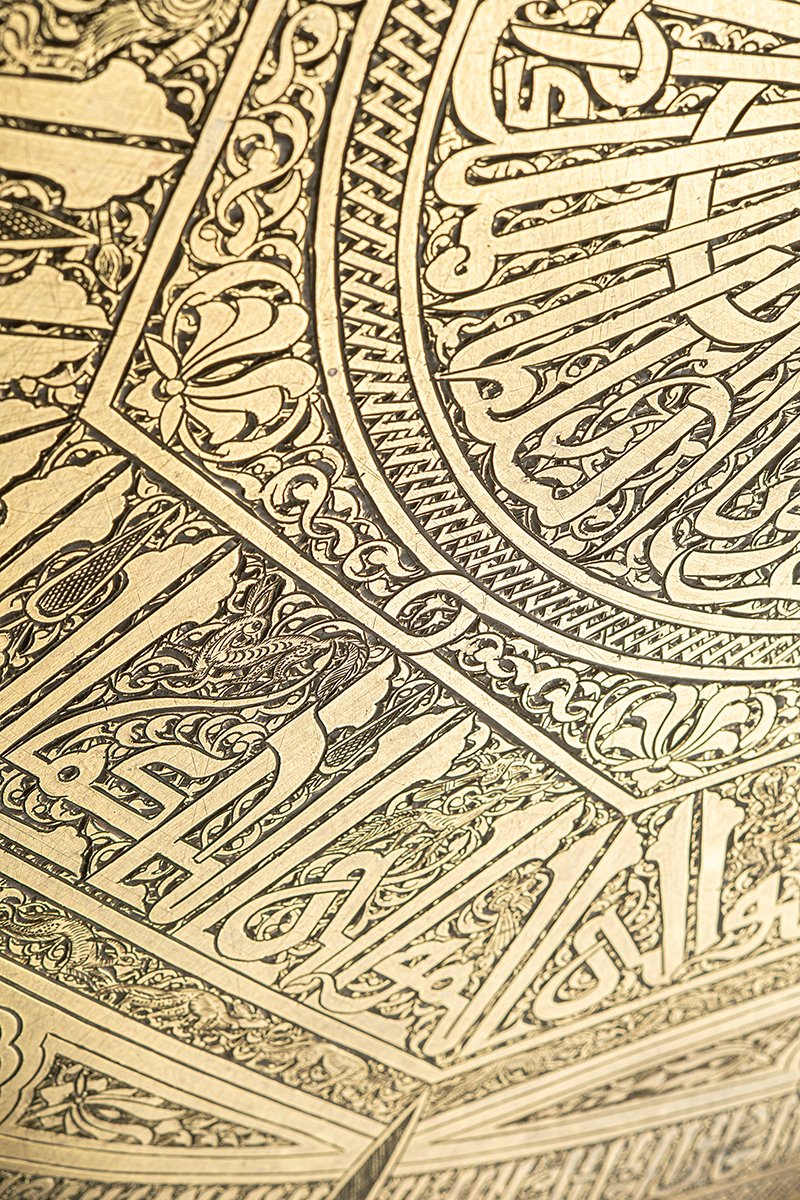
Within the hexagon, the surface teems with subtle life. Between the shafts of script, arabesque foliage sprouts blossoms and leaves, curling into pointed tendrils. Hidden among them emerge tiny beasts and birds, serpentine coils, winged forms, crouching animals, so seamlessly woven that they reveal themselves only upon long study. At the lower register, a miniature architectural frieze appears: domes, arches, and minarets, evoking the skyline of a palace city and placing the entire composition within a sacred courtly setting.
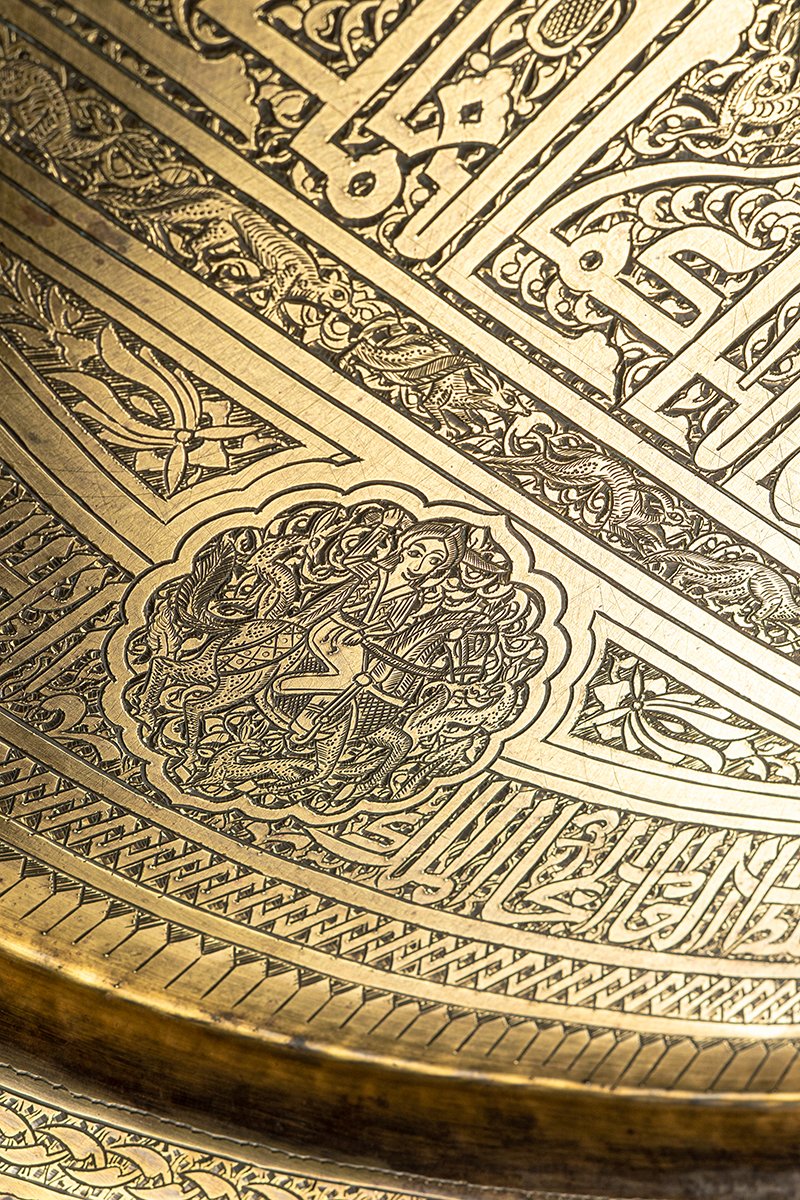
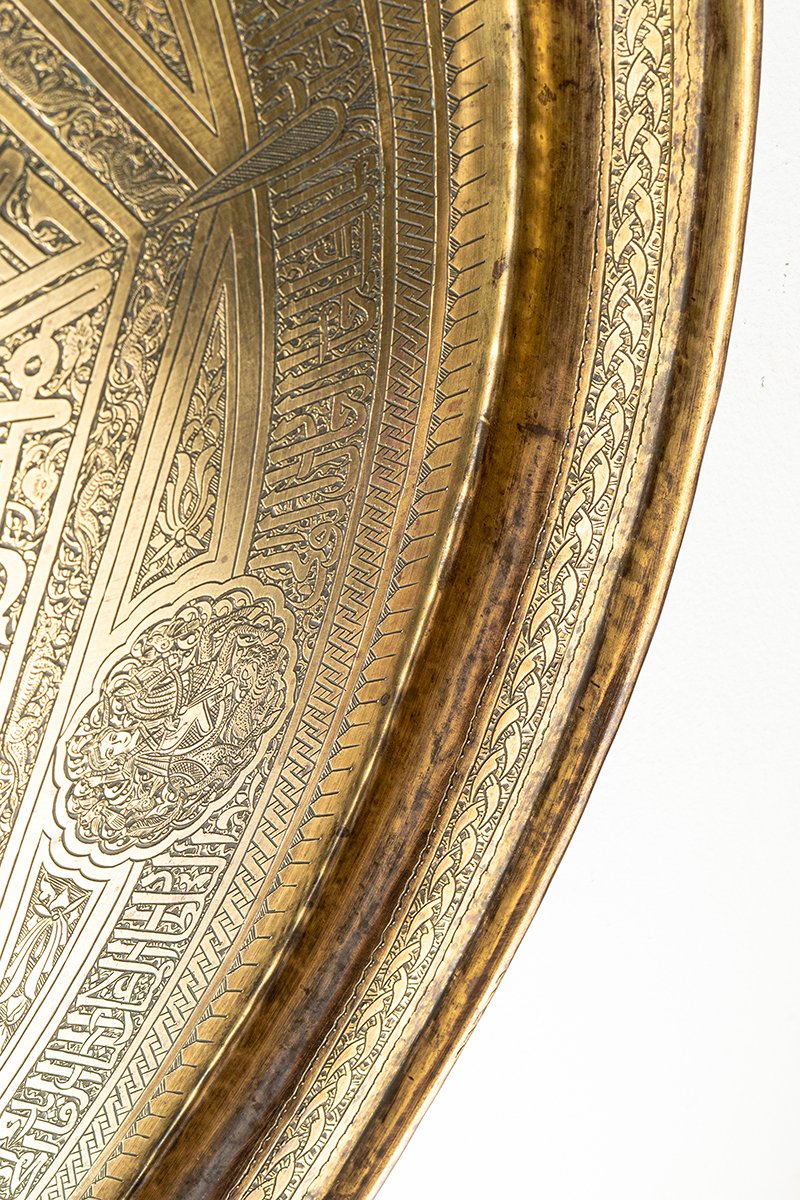
At the hexagon’s six corners, lobed medallions contain engraved riders. Mounted figures, bows drawn and standards raised, serve as guardians of this cosmic geometry, eternal protectors standing watch at the frame of the divine hexagon. Their motion contrasts with the stillness of the geometry, adding life to balance form.
Calligraphic Inscriptions
At the heart of the tray appears the seal of Sultan Muḥammad ibn Ṭūlūn (ختم السلطان محمد بن طولون), encircled by praises to his sovereignty. The inscriptions proclaim:
"عز لمولانا السلطان وله السلطان عزه"
Transliteration:
ʿIzz li-mawlānā al-Sulṭān wa lahu al-sulṭān ʿizzah.
Translation:
“Glory to our lord, the Sultan, and to him belongs exalted sovereignty.”
Surrounding these praises are six circles of princes and warriors, each invoked in the inscriptions, emphasizing loyalty and hierarchy encircling the ruler.
Artistic Details
- Kufic & Mamluk Calligraphy: The tray masterfully combines two traditions: bold Kufic script in the central and middle bands, intersecting with animal and bird forms, and Mamluk calligraphy in the outer zones, denser and more decorative, anchoring the composition.
- Zoomorphic Kufic: Letters transform into beasts, foxes, gazelles, and birds, each letter animated into symbolic guardians of strength and grace. The Kufic alphabet is not static but alive, populated with creatures that embody vigilance, agility, and wisdom.
- Circles of Beasts: Between the Kufic and Mamluk zones are multiple concentric circles of animals, lions, birds, gazelles, each in rhythmic motion, forming living halos of protection.
- Architectural Rim: The outer border thickens in layers, braided interlace, flowing calligraphy, and finally a rim cut like a crown, reinforcing sovereignty and divine kingship.
Interpretation
This tray is less a vessel than a mandala of rulership, where geometry, faith, and life converge. At its heart, the Sultan’s seal radiates authority; around him, sixfold guardianship of warriors and princes. The Kufic script embodies permanence, yet its letters are alive with beasts and birds, while the Mamluk inscriptions at the base elevate the work into dynastic continuity. The result is a cosmic proclamation of protection and dominion: word, beast, and geometry locked together into a vision of eternal sovereignty.