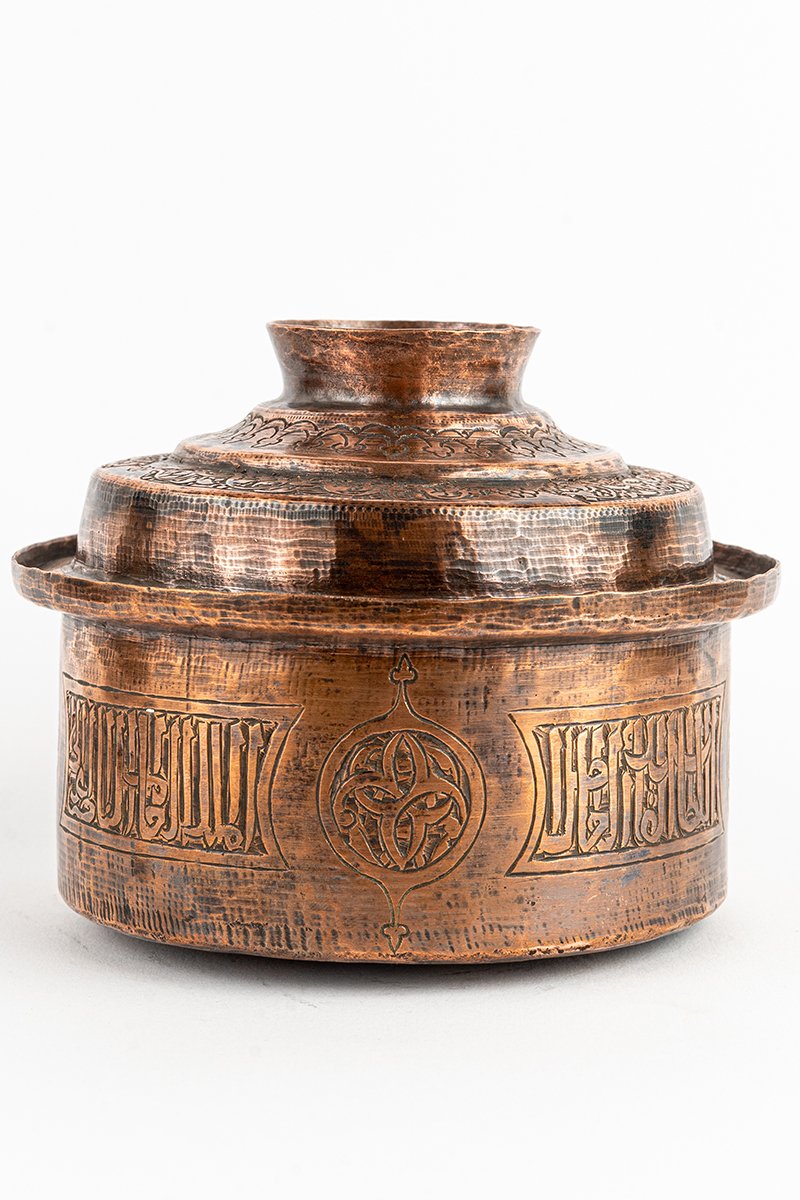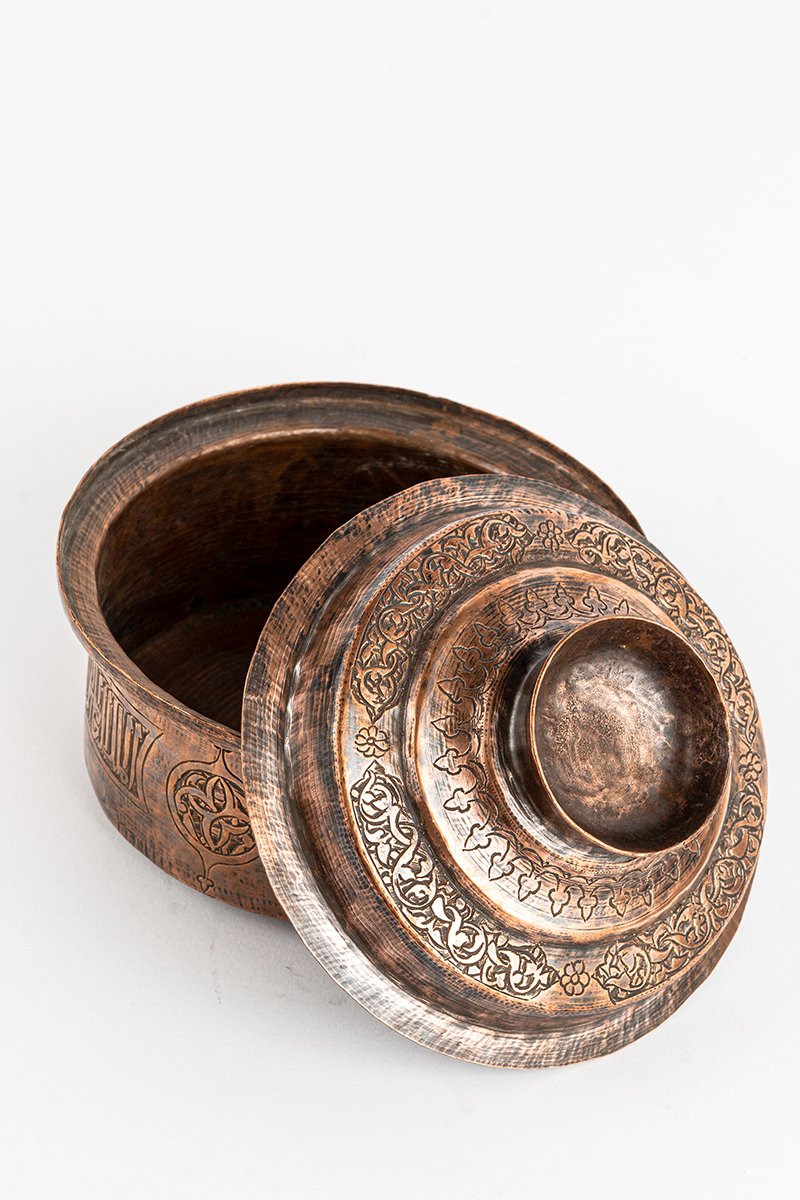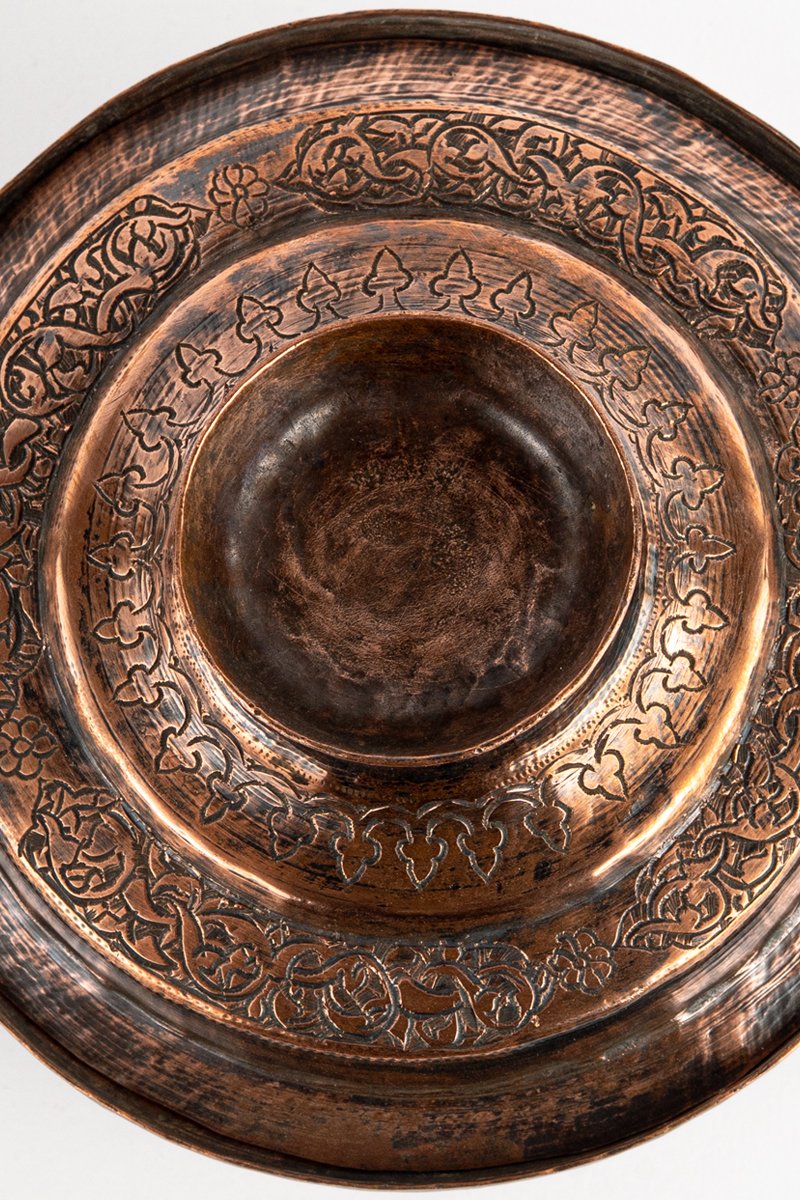
This lidded copper jar is a refined example of functional art fused with ornamental mastery, embodying the Fatimid tradition of uniting inscription, geometry, and vegetal design. Its proportions, rounded body, domed lid, and central knop reflect both utility and symbolic presence, making it an object of ceremony as well as daily refinement.
Calligraphic Inscriptions
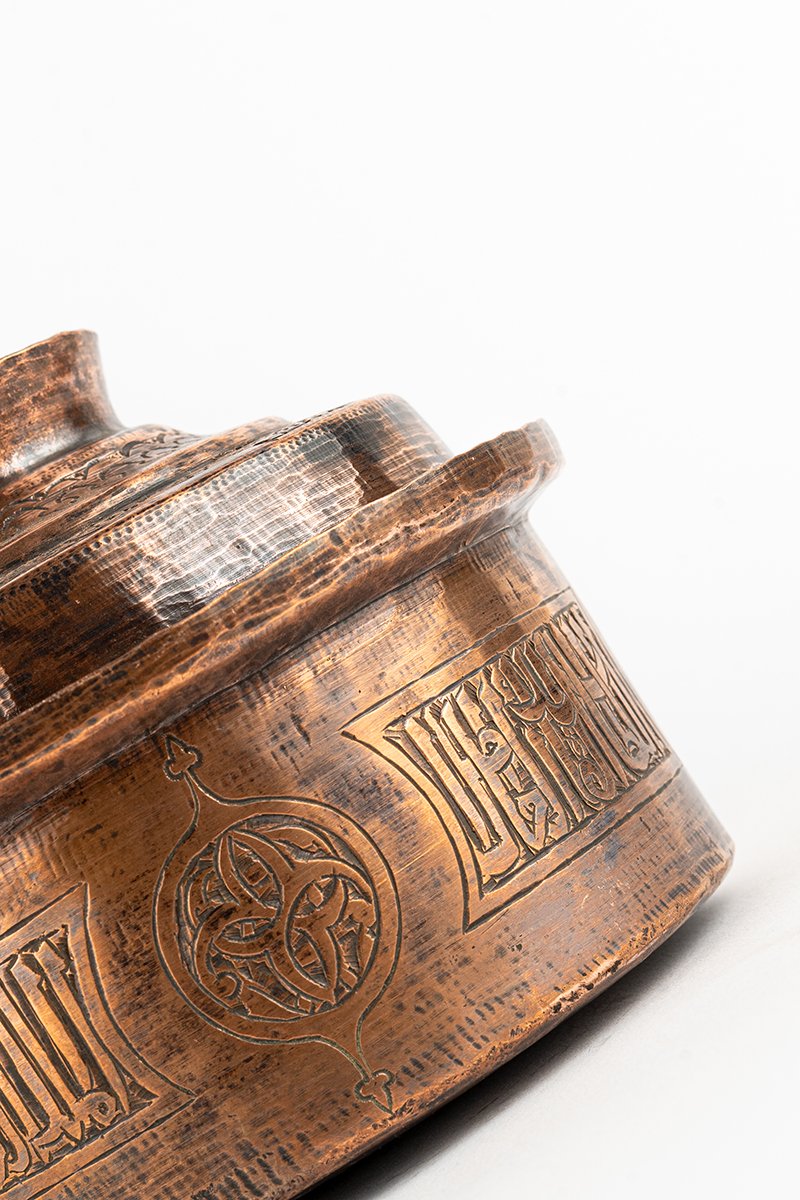
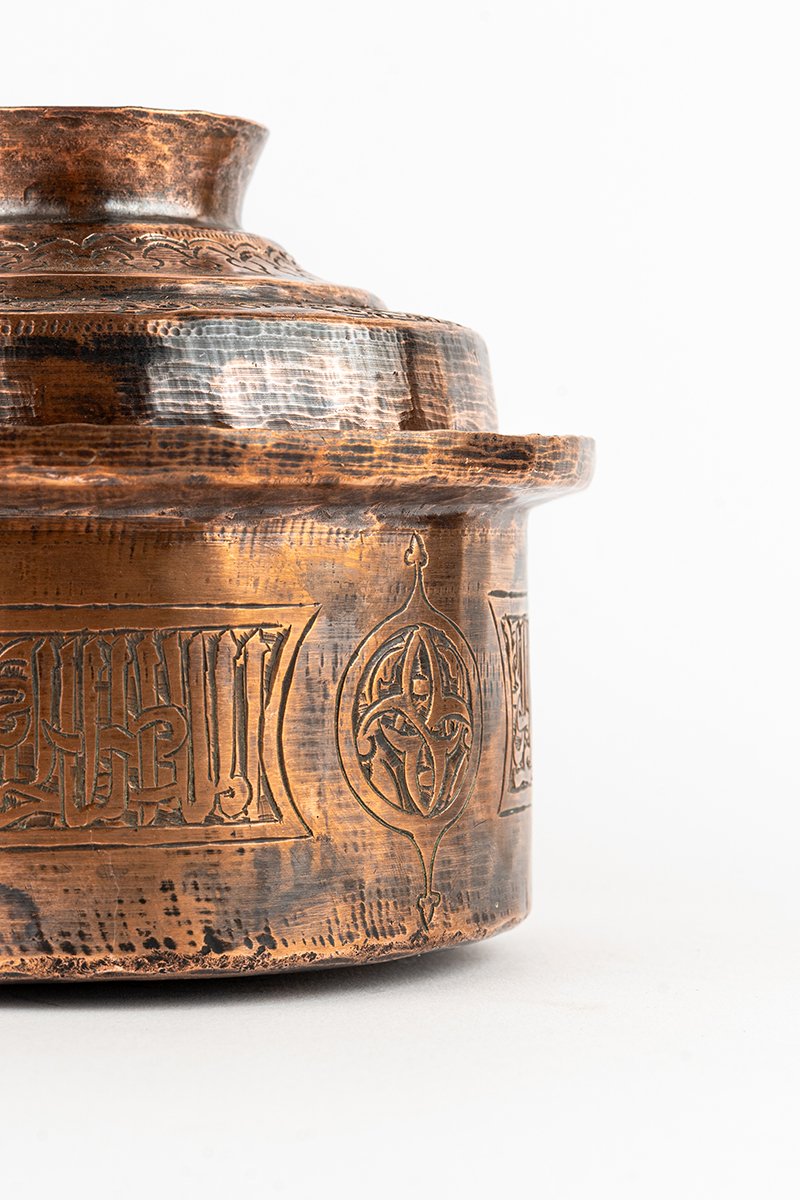
The body is encircled by rectangular cartouches inscribed with praises to the Sultan, in Kufic-inspired script of solemn rhythm:
Arabic:
"العز لمولانا السلطان الملك الناصر"
Transliteration:
al-ʿizz li-mawlānā al-sulṭān al-malik al-nāṣir.
Translation:
“Glory to our lord, the Sultan al-Malik al-Nāṣir.”
The inscriptions alternate with medallions of geometric interlace, symbols of infinity and continuity.
Artistic Details
- Cartouche Band: Rectangular calligraphic panels dominate the body, framed with arabesque scrolls that unify text and ornament.
- Geometric Medallions: Between the cartouches lie interlaced rosettes and arabesques, emblems of eternity and divine order.
- Stepped Dome Lid: The lid rises in a tiered dome, bordered by concentric floral bands etched with vines and petals, recalling gardens of paradise.
- Central Knop: A raised knop crowns the lid, serving as both a functional grip and a visual anchor.
- Surface Texture: The hammered copper body bears a natural aged patina, shimmering between warm tones and darker recesses, deepened by centuries of touch.
Interpretation
This jar embodies the Fatimid ideal of merging word and nature into a unified whole. The cartouches proclaim the Sultan’s authority, while the lid’s flourishing canopy of vegetal design evokes paradise itself. Likely used in ceremonial or prestigious domestic settings to hold spices, offerings, or precious substances, it proclaims both refinement and devotion, a crafted object of enduring artistry.
Calligraphic & Symbolic Inscriptions
Instead of words alone, this ewer carries a script of symbols:
- Stars & Seals: Interlocking star motifs spread across the body, forming protective talismans and geometric seals that echo the heavens, invoking divine order and guidance.
- Crowns: Repeated diadems encircle the vessel, evoking royal authority as well as celestial crowns worn by the pious and the powerful.
- Fish Bands: Rows of fish swim along the borders, signifying flowing abundance, fertility, and sacred waters. In Judaic tradition, fish are bound to Shabbat, Saturday, as a holy day of rest, where they embody both life and blessing.
- Temple Motifs: Depictions of worshippers entering a sanctuary evoke the centrality of divine service, framing the ewer as an offering of devotion as much as a functional object.
Artistic Details
- Lions of Strength: Pairs of lions stride in balance and symmetry, guardians of thresholds, protectors of sacred boundaries, and emblems of enduring strength.
- Radiant Lamp: Near the neck, a great lamp with branching arms flares outward, symbolizing eternal flame, illumination, and wisdom, a beacon guiding across generations.
- Geometric Harmony: The entire surface is structured by layered bands, stars, crowns, fish, lions, each interlocking, creating a seamless cycle of strength, fertility, protection, and divine continuity.
- Copper Glow: The hammered surface gleams with a reddish warmth, its depth of patina enhancing the sense of age and sacred permanence.
Interpretation
This ewer is not simply a container but a proclamation of cosmic sovereignty. Its imagery unites Babylonian echoes with Jewish sacred tradition: lions for strength, crowns for authority, fish for blessing, lamps for eternal flame, and stars as heavenly order. Together, they narrate a theology of protection and prosperity, situating the vessel as both ritual object and cosmological map, an axis linking water, flame, crown, and star.
Material
Copper, hand-engraved
Brand
Brasura Art
Weight
500 g
Height
13 cm