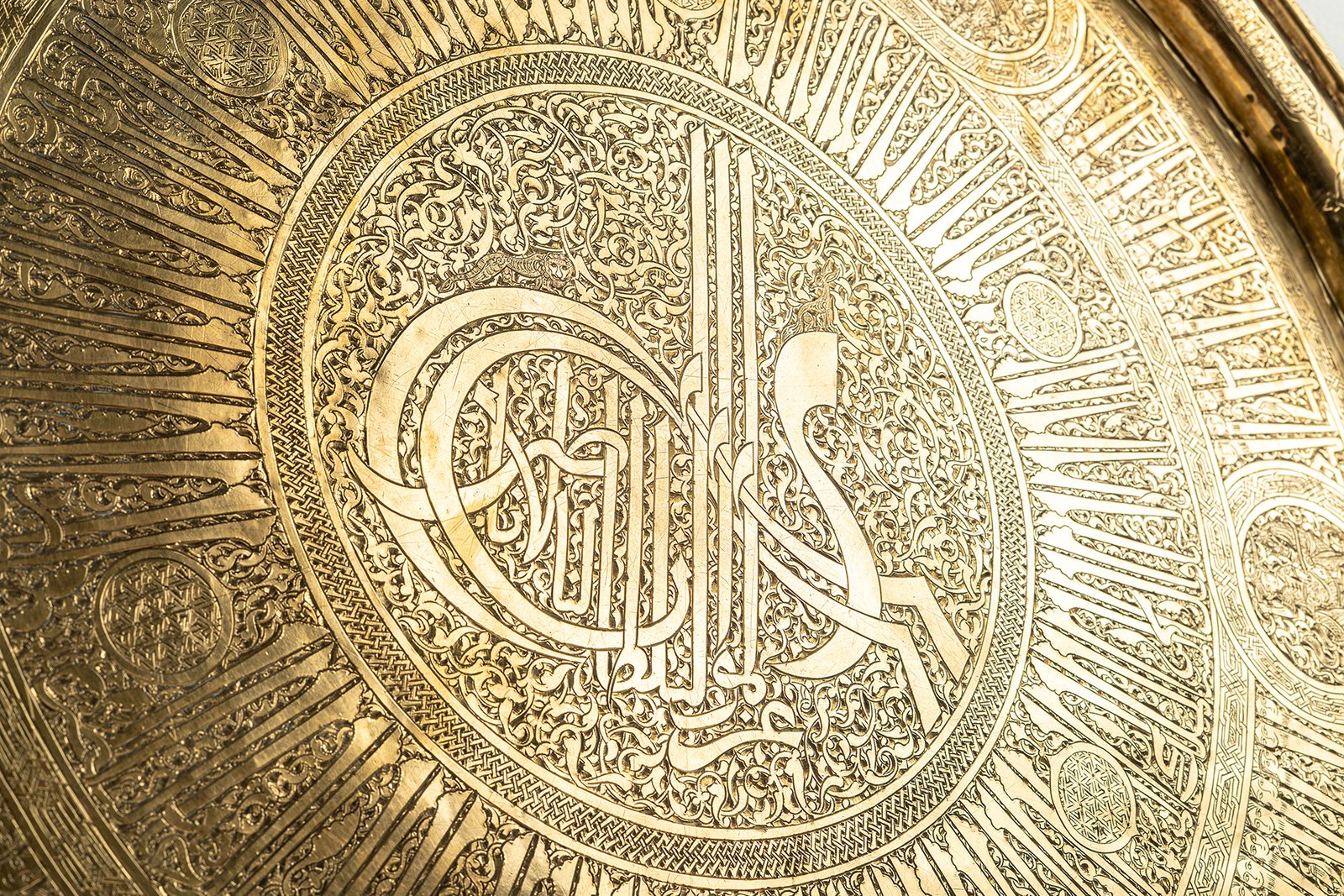
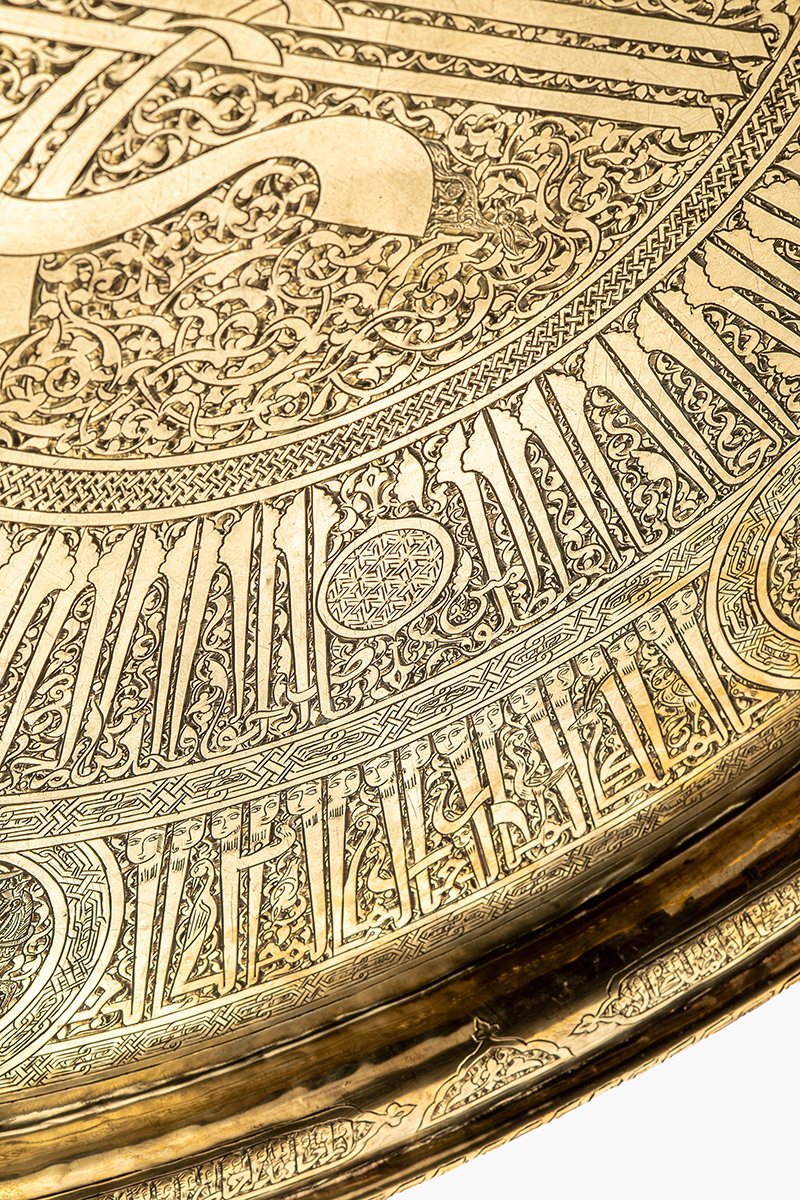
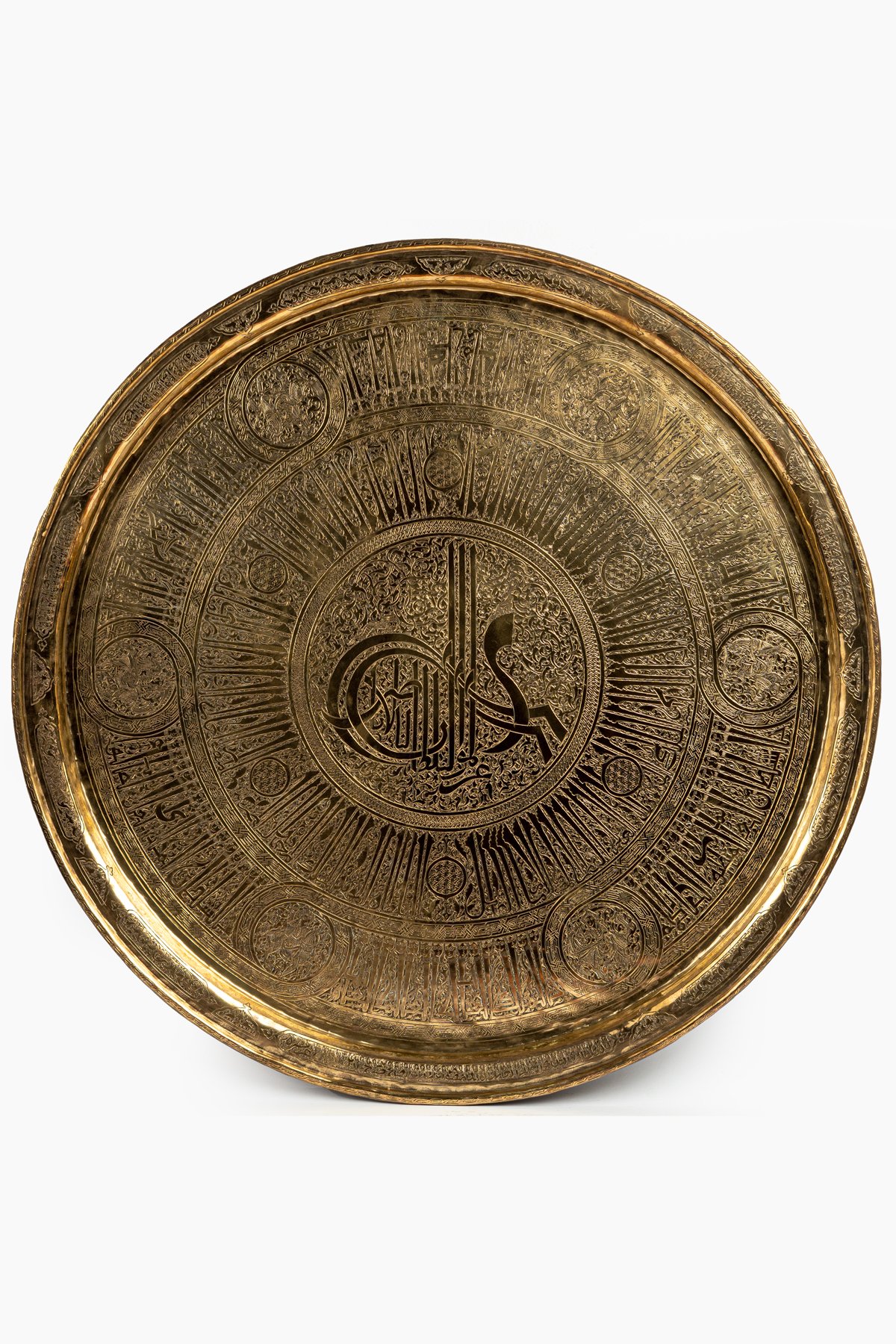
This antique brass tray radiates sovereignty through its centerpiece: a bold tughra (طغراء), the calligraphic emblem once used by sultans as their personal signature of power and identity. More than an ornament, the tughra is a proclamation of authority, a fusion of flowing script and artistry that symbolized rulership across the empire. Its placement at the heart of the tray asserts centrality, dominance, and enduring legacy.
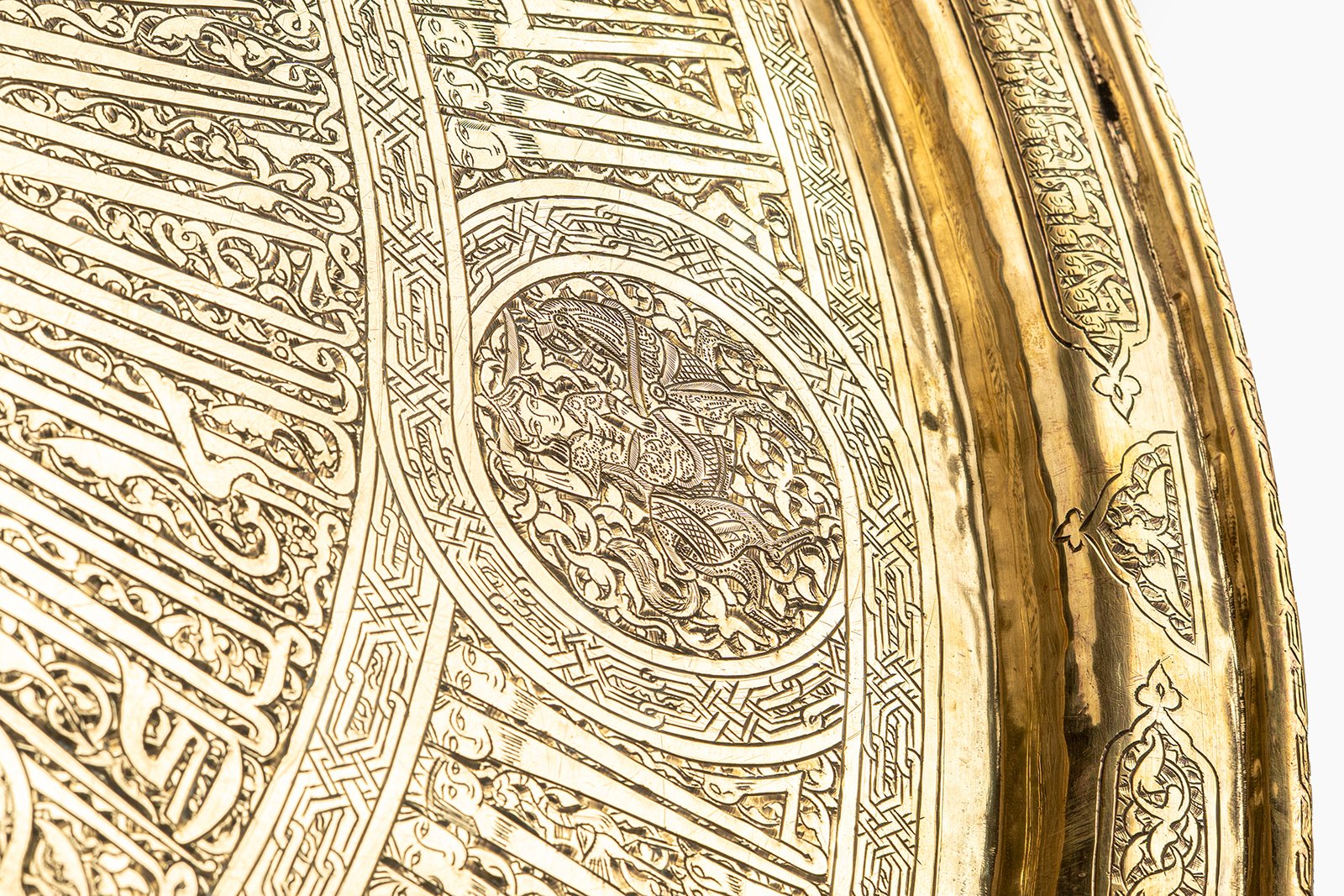
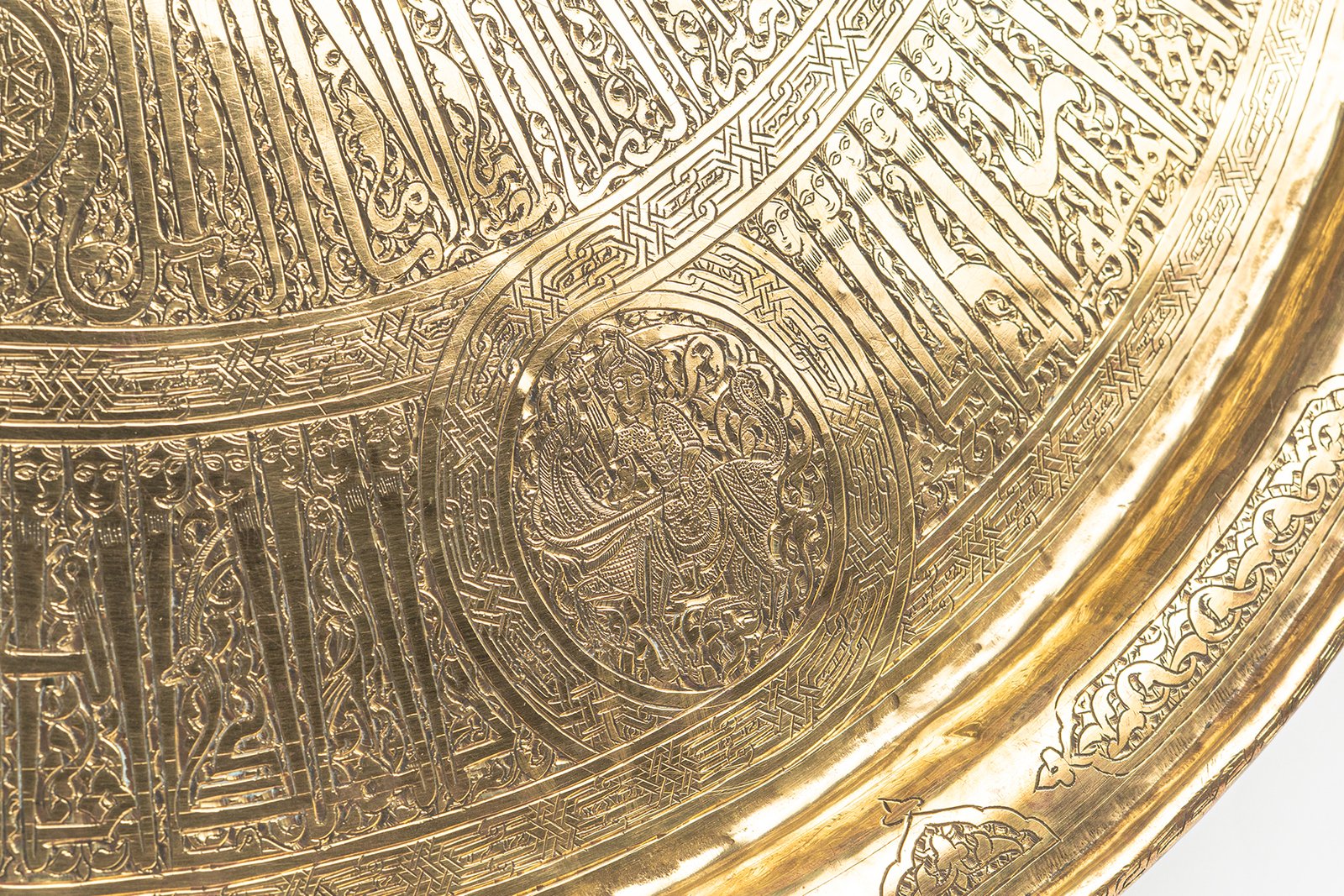
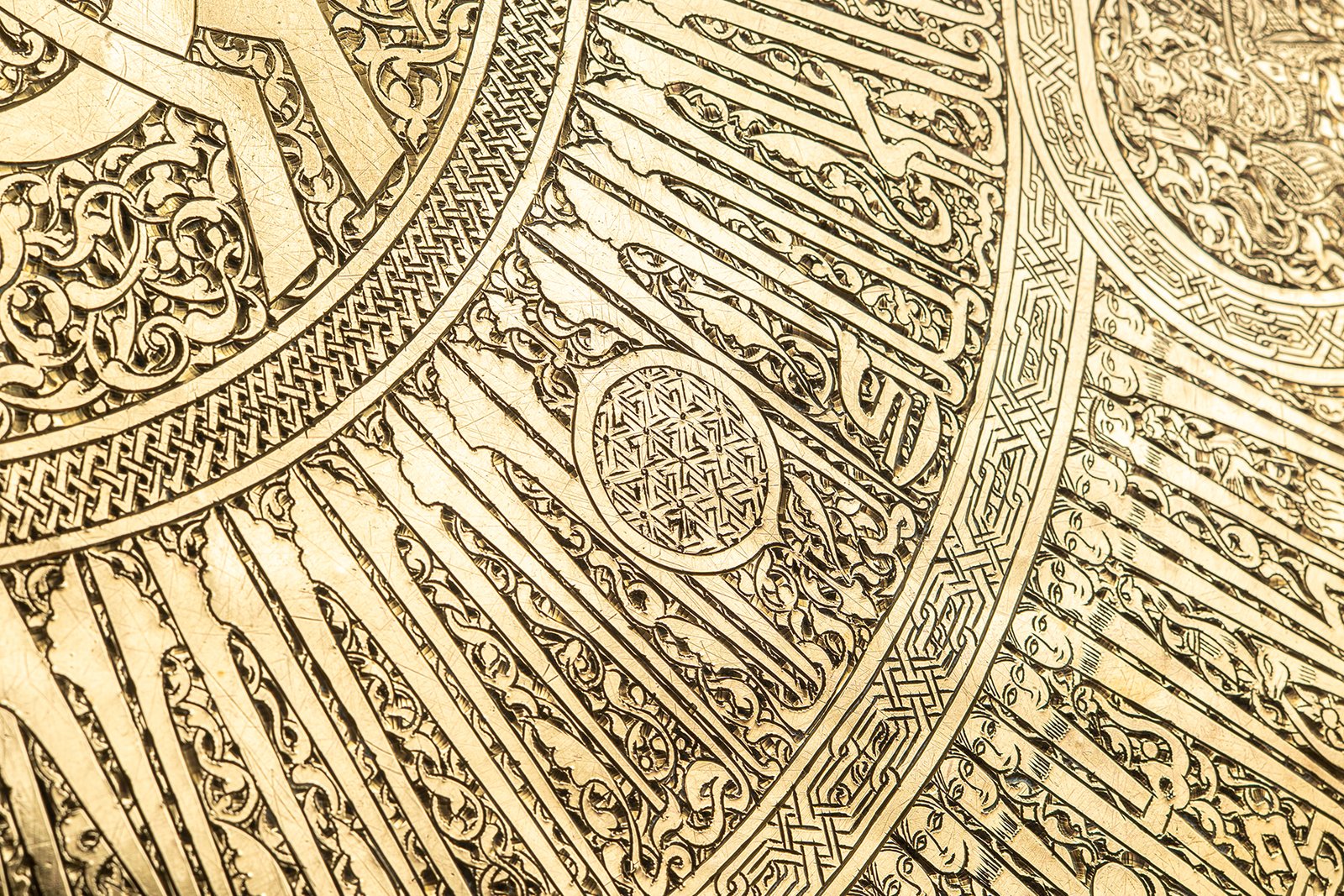
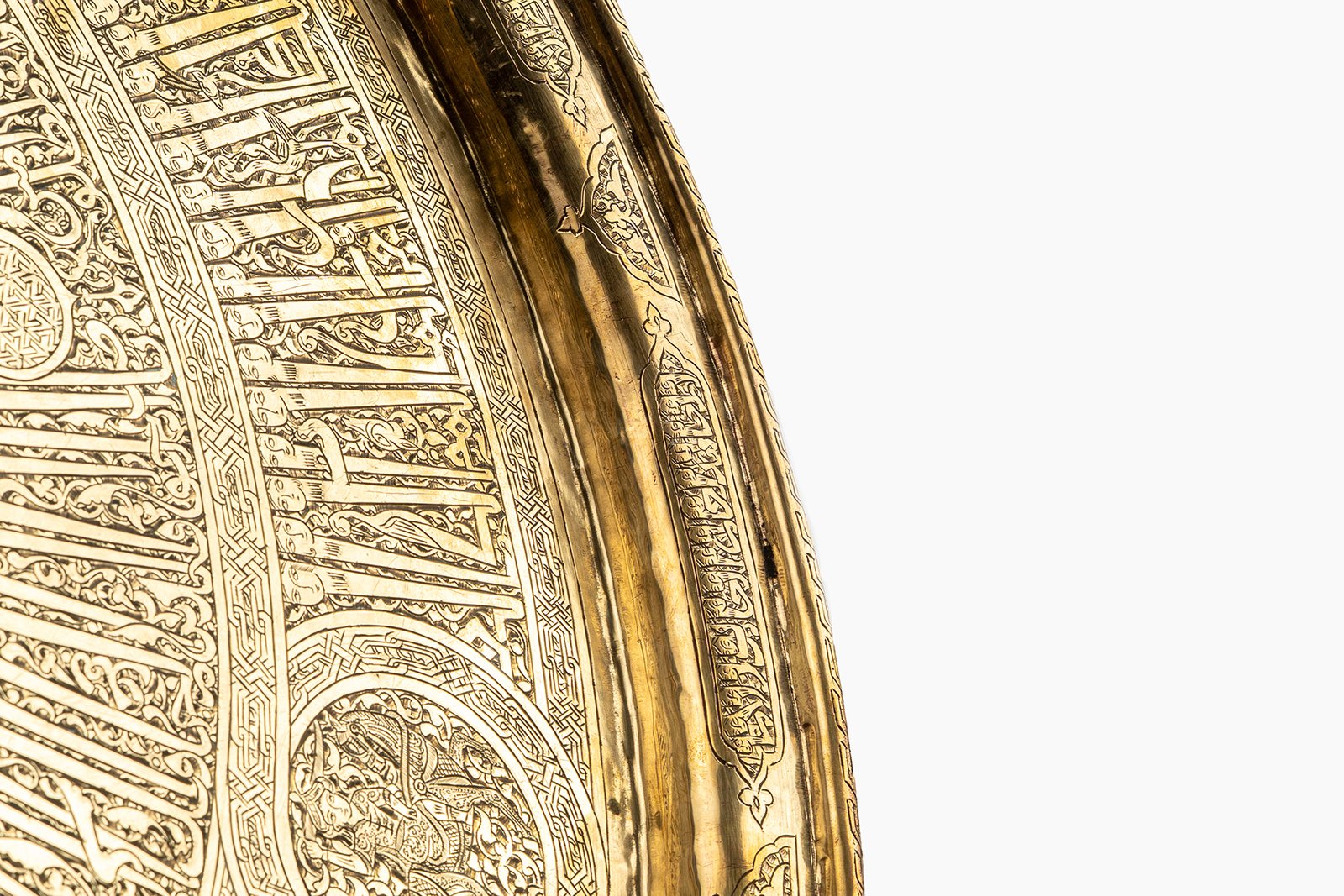
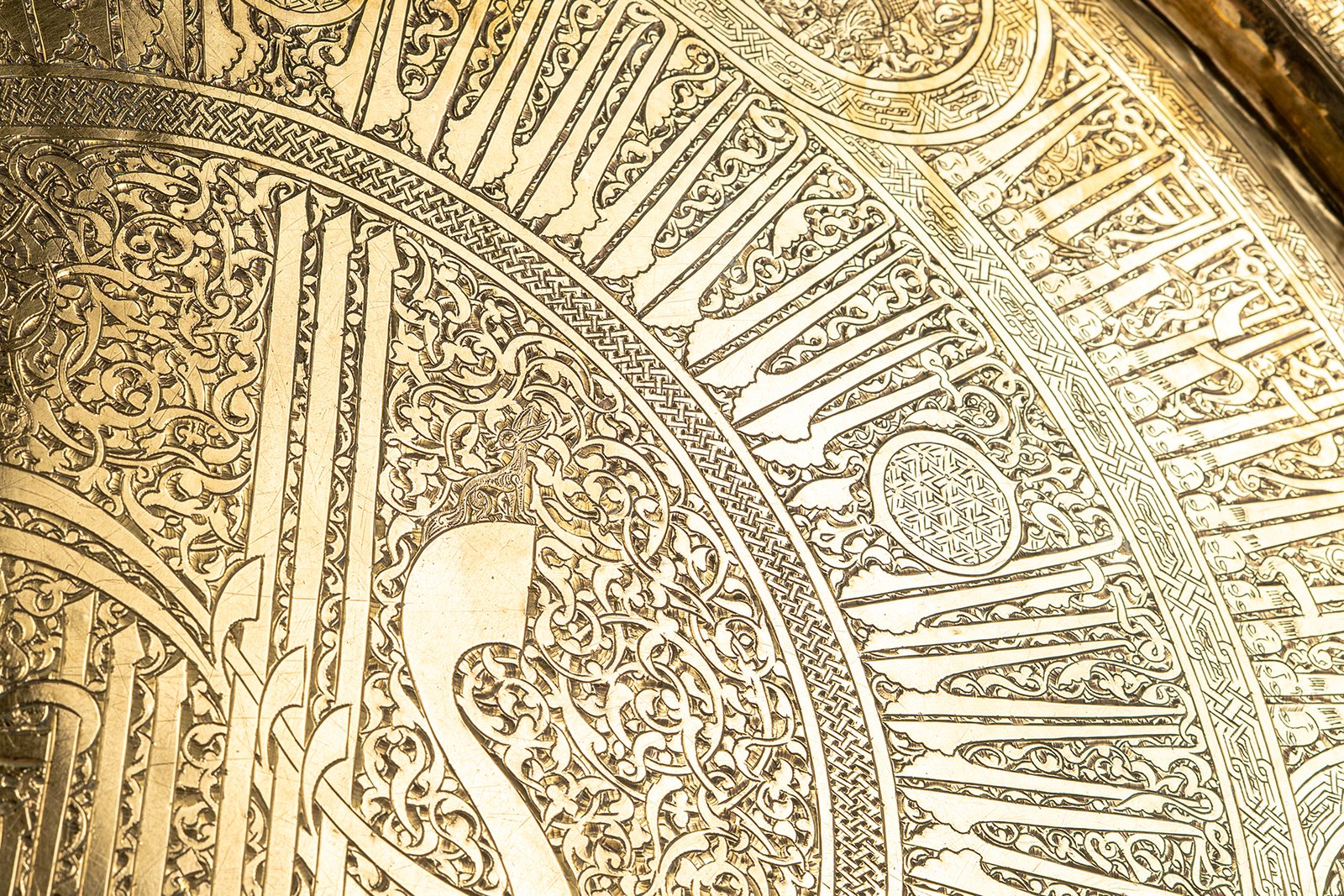
Surrounding the emblem are warrior horsemen, finely engraved in motion. With bows and lances in hand, they serve as guardians of the sovereign’s mark, protectors of the realm and throne, and embodiments of loyalty and vigilance. Among them are animals, lions, deer, foxes, owls, and gazelles, each symbolizing strength, vitality, wisdom, and beauty. Encircling all are radiant bands of calligraphy, stretching outward like beams of light, carrying blessings and royal titles across the surface.
Calligraphic Inscriptions
The inscriptions praise the Sultan with extended honorifics:
"عز لمولانا السلطان الملك الناصر المؤيد المحارب المجاهد"
(ʿIzz li-mawlānā al-Sulṭān al-Malik al-Nāṣir al-Muʾayyad al-Muḥārib al-Mujāhid)
Translation:
“Glory to our lord, the Sultan, the Victorious King, the Supported, the Warrior, the Fighter in God’s cause.”
Artistic Details
- Zoomorphic Calligraphy (حروف حيوانية – ḥurūf ḥaywāniyya): The calligraphy transforms at its edges into birds, animals, and faces. The letter sīn in “Sultan” spreads into three bird heads; the letter nūn bends into the form of a bird. Other letters terminate in foxes (for cleverness), owls (for wisdom), gazelles (for grace), and lions (for power).
- Faces of Joy: Human visages, often crowned princes and princesses, appear subtly at the ends of strokes. Their expressions of contentment mirror the inscription’s theme: a ruler under whom subjects thrive in safety and prosperity.
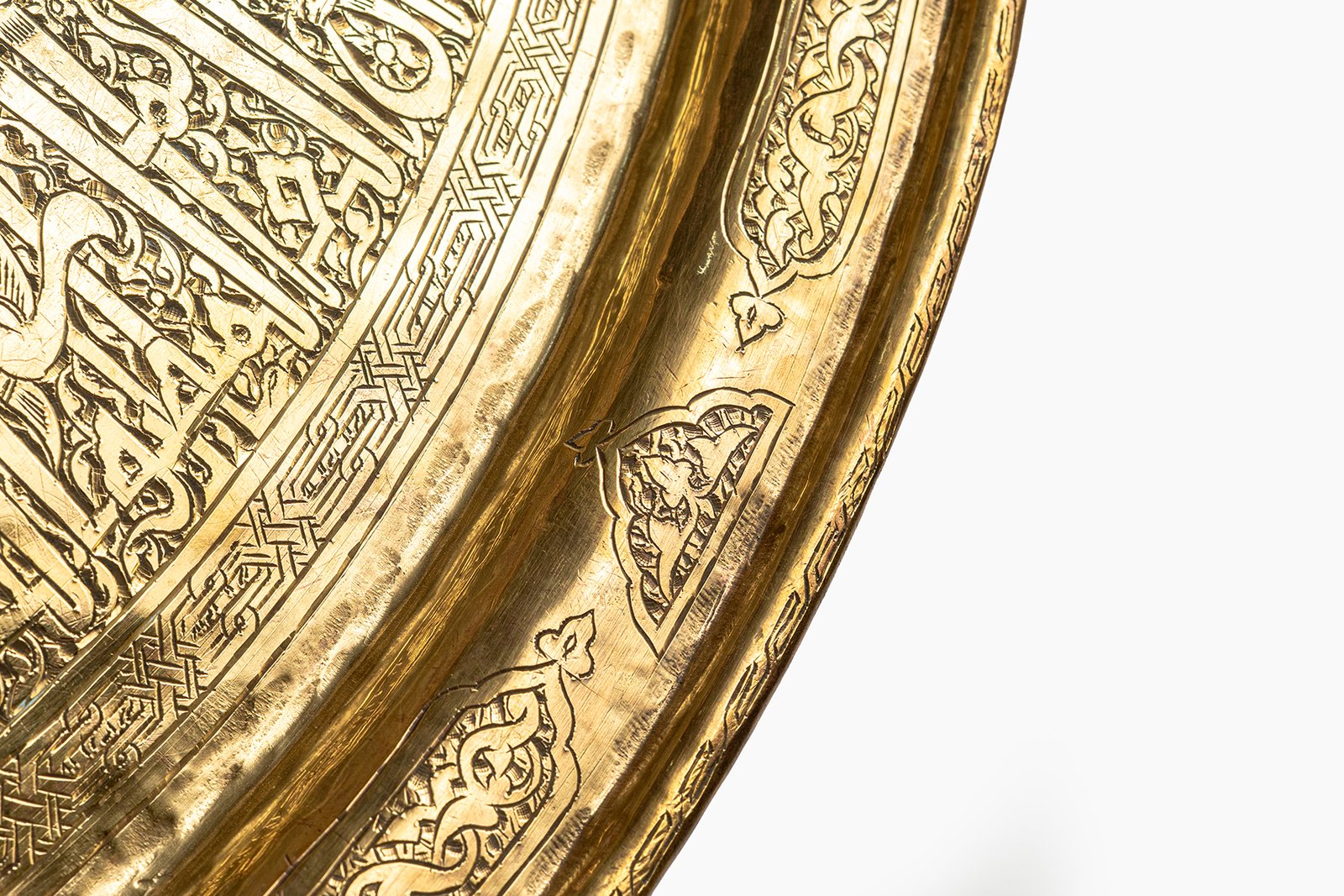
- Ayūbid Style (أسلوب أيّوبي – uslūb ayyūbī): This piece exemplifies Ayūbid artistry,not Ottoman. Hallmarks include complex geometric circles, letters elongated or compressed to create balance, and playful integration of zoomorphic and anthropomorphic motifs.
- Islamic Vines (زخارف نباتية – zakhārif nabātiyya): Flowing arabesques fill the spaces between inscriptions, binding script, geometry, and animal forms into a seamless whole.
Interpretation
This tray is more than a vessel; it is a masterpiece of political symbolism. The tughra at its center declares sovereignty; the horsemen guard it; the animals illustrate dominion over nature; and the smiling faces woven into the script reflect the harmony of ruler and subjects. By blending geometry, calligraphy, animal forms, and portraiture, the artist forged a proclamation in brass: one of justice, protection, prosperity, and royal grandeur.